
Introduction
In recent years, the field of radiation oncology has witnessed remarkable advancements, one of which is Adaptive Radiotherapy (ART). This innovative approach to cancer treatment is revolutionizing the way radiation therapy is delivered, offering personalized and precise treatment plans that can adapt to changes in a patient’s anatomy and tumor characteristics over the course of treatment. Adaptive Radiotherapy holds immense promise in improving treatment outcomes and minimizing the potential side effects associated with radiation therapy.
✓
The Basics of Adaptive Radiotherapy
In recent years, the field of radiation oncology has witnessed remarkable advancements, one of which is Adaptive Radiotherapy (ART). This innovative approach to cancer treatment is revolutionizing the way radiation therapy is delivered, offering personalized and precise treatment plans that can adapt to changes in a patient’s anatomy and tumor characteristics over the course of treatment. Adaptive Radiotherapy holds immense promise in improving treatment outcomes and minimizing the potential side effects associated with radiation therapy.
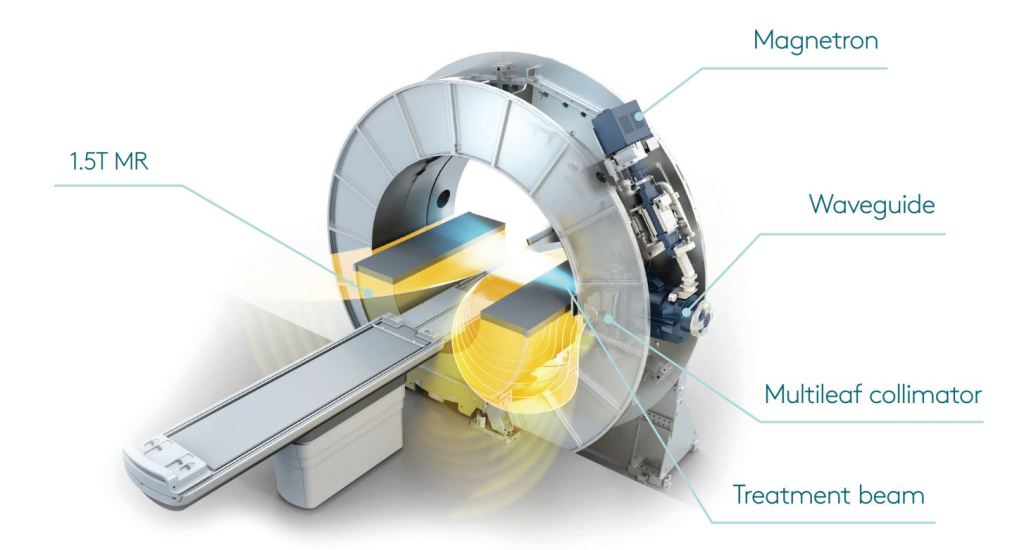
Adaptive Radiotherapy addresses this challenge by incorporating real-time or periodic imaging, such as CT scans or MRIs, during the treatment process. These images provide up-to-date information about the patient’s anatomy and tumor characteristics, enabling clinicians to modify the treatment plan accordingly. By identifying changes in real-time and adjusting the radiation doses accordingly, ART ensures that the optimal therapeutic dose is delivered precisely to the tumor while sparing healthy tissues.
✓
Key Benefits of Adaptive Radiotherapy
Personalized Treatment
Every patient’s response to radiation therapy can be unique. ART enables oncologists to tailor treatment plans according to a patient’s specific needs, maximizing the therapeutic effect while minimizing unnecessary radiation exposure to healthy tissues.
1. Enhanced Treatment Accuracy
As the treatment plan adapts to changes in tumor size, shape, and location, the accuracy of radiation delivery is greatly improved. This precision minimizes the risk of damaging nearby critical structures and organs.
2. Improved Treatment Efficacy
With the ability to adjust the treatment plan based on real-time information, ART increases the likelihood of effectively targeting the tumor throughout the treatment course. This can lead to better tumor control and ultimately higher treatment success rates.
3. Improved Treatment Efficacy
With the ability to adjust the treatment plan based on real-time information, ART increases the likelihood of effectively targeting the tumor throughout the treatment course. This can lead to better tumor control and ultimately higher treatment success rates.
4. Reduced Side Effects
By avoiding unnecessary radiation to healthy tissues, patients undergoing adaptive radiotherapy experience fewer side effects, enhancing their overall quality of life during and after treatment.
6. Dynamic Treatment Response Assessment
ART allows clinicians to assess how a tumor is responding to treatment and make necessary adjustments promptly. This adaptability can lead to earlier identification of treatment resistance or changes in the tumor’s behavior.
✓
Challenges and Future Directions
While Adaptive Radiotherapy offers promising advantages, its widespread implementation faces certain challenges. Incorporating real-time imaging into treatment workflows can be resource-intensive and time-consuming. Additionally, the technical aspects of adapting treatment plans dynamically require advanced software and hardware capabilities.
As technology continues to evolve, these challenges are likely to be addressed. Innovations in imaging technology, automation, and treatment planning software will make Adaptive Radiotherapy more accessible and feasible for a broader range of cancer patients.
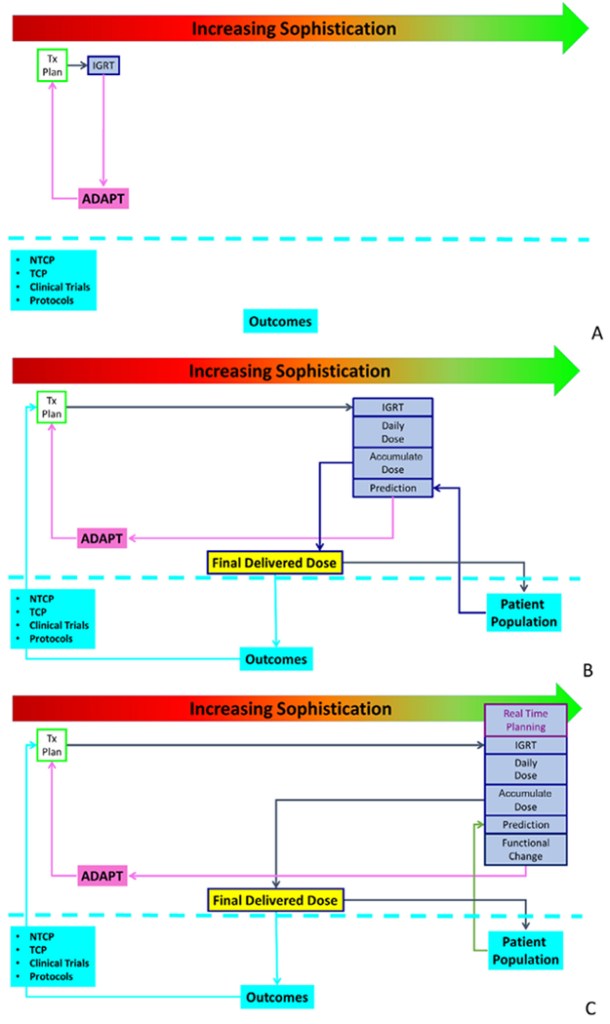
Increasing levels of sophistication in adaptive radiotherapy, ranging from simple IGRT-based replanning (A) to DIR-based dose accumulation and the development of predictive models tied to an outcomes database (B) to online replanning and functional guidance (C). DIR, deformable image registration; IGRT, adaptive image-guided radiotherapy [3].
Conclusion
Adaptive Radiotherapy represents a significant step forward in the field of cancer treatment. Its ability to adapt to changes in a patient’s anatomy and tumor characteristics during the course of treatment holds the potential to revolutionize radiation therapy outcomes. By providing personalized, accurate, and dynamic treatment plans, Adaptive Radiotherapy offers new hope for patients and clinicians alike. As research and technology progress, this approach is poised to become a cornerstone in the fight against cancer, improving patient experiences and treatment success rates.
Author: Abdelhai Ben Ali, PhD
Supporting documents
- Carri K Glide-Hurst, Percy Lee, Adam D Yock et al., Adaptive Radiation Therapy (ART) Strategies and Technical Considerations: A State of the ART Review From NRG Oncology. Int J Radiat Oncol Biol Phys. 2021 Mar 15;109(4):1054-1075. doi: 10.1016/j.ijrobp.2020.10.021. Epub 2020 Oct 24. read the article.
- Huzaifa Piperdi, Daniella Portal, Shane S. Neibart et al., Adaptive Radiation Therapy in the Treatment of Lung Cancer: An Overview of the Current State of the Field. Front. Oncol., 29 November 2021, Sec. Radiation Oncology. Volume 11 – 2021. https://doi.org/10.3389/fonc.2021.770382, read the article.
- Kristy K. Brock. Adaptive Radiotherapy: Moving Into the Future. Semin Radiat Oncol. 2019 Jul; 29(3): 181–184. doi: 10.1016/j.semradonc.2019.02.011, read the article.
 Computational Visua TEK